
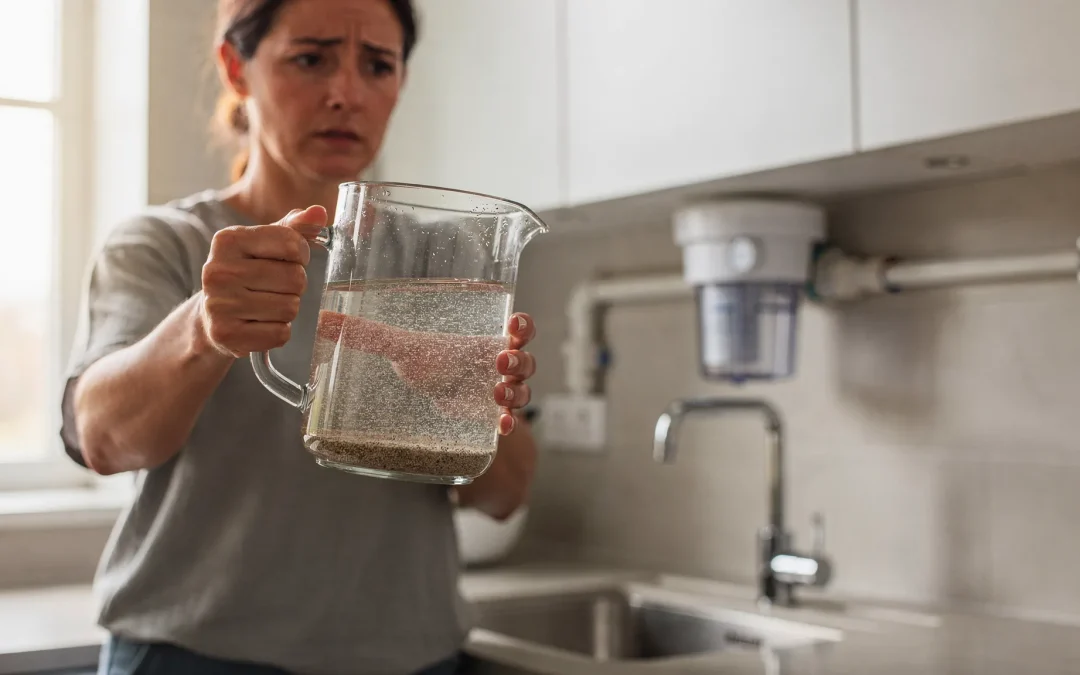
If you live in Kingston Mills, you may have noticed it at the worst times: a gritty “sand” feeling in the tap water, specks in the toilet tank, or faucet aerators that clog up again right after you clean them. Sediment and grit are usually a mechanical problem first (they damage fixtures and reduce flow), but they can also be an early clue that your home needs a better filtration plan, especially in pockets near the Rideau Canal where seasonal changes and older infrastructure can show up at the tap.
Below is a practical, homeowner-friendly guide to identify what you’re seeing, protect your plumbing, and choose the right long-term solution for Kingston Mills homes on city water or well water.
First, confirm it’s sediment (not scale, rust, or carbon fines)
“Grit” gets used to describe a few different things, and the fix depends on what it actually is.
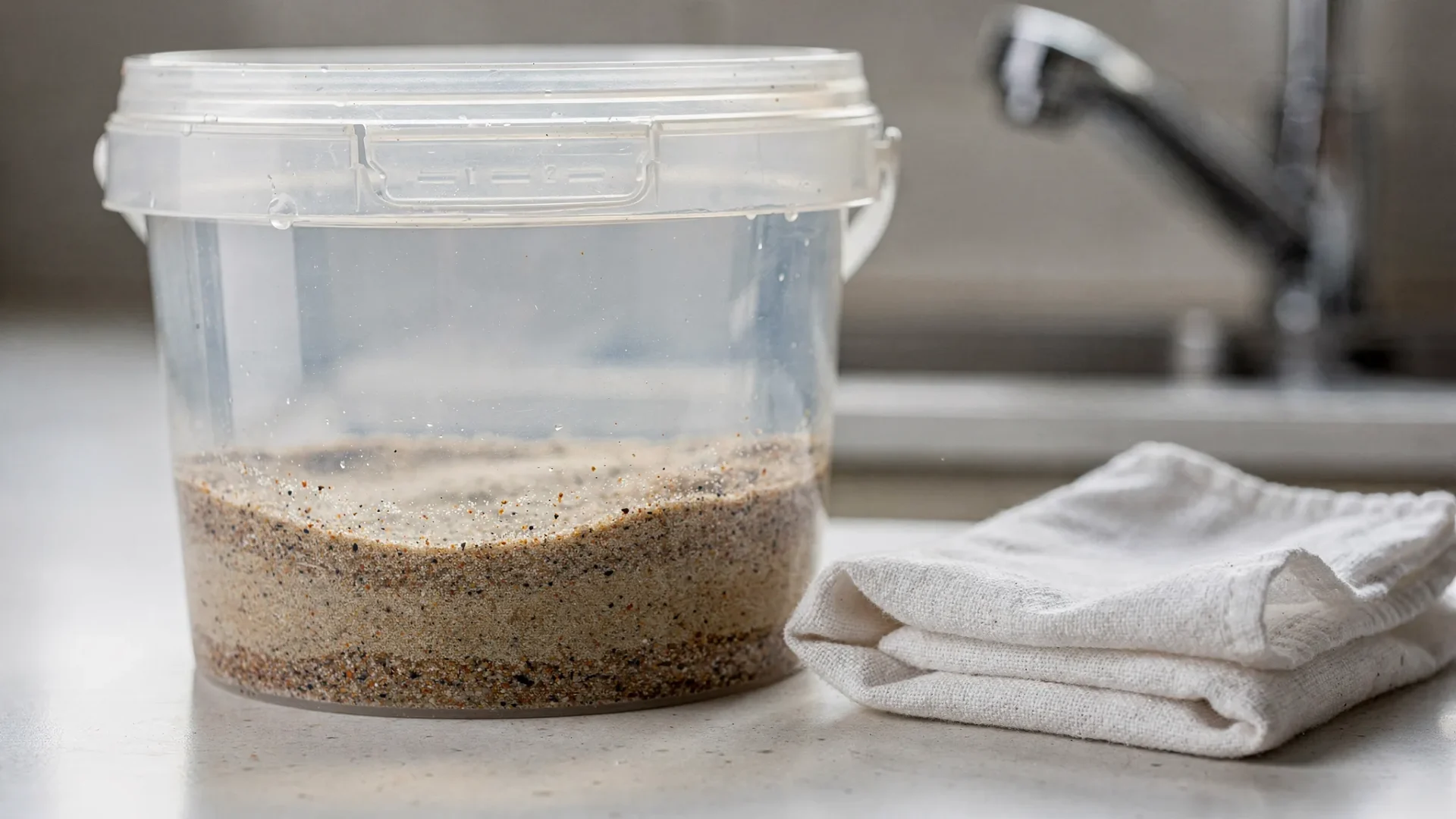
- Sediment or sand (grit): Feels like tiny grains, settles to the bottom of a glass or bucket, often tan or grey.
- Hard water scale: White crust on fixtures and kettles, film on shower glass, and buildup is worst on hot water. (This is dissolved minerals that turn solid when heated.)
- Rust or corrosion particles: Orange, brown, or black flecks, sometimes after water has sat in pipes.
- Carbon fines: Black dust that can appear after changing a carbon filter (common and usually temporary).
If you’re unsure, TapTech’s post on testing accuracy can help you decide what you can learn at home versus when to bring in a pro: Water testing at home vs. pro testing.
Why Kingston Mills homes see sediment and grit
Kingston Mills is a mix of property types, and that matters because sediment shows up for different reasons.
On municipal (city) water
Sediment events on city water are often temporary, and commonly related to:
- Watermain work or repairs that stir up harmless debris
- Hydrant flushing (often seasonal)
- Pressure changes that dislodge older buildup inside neighbourhood piping
If your water changes suddenly (cloudy, discoloured, or gritty), it can be worth checking local notices or contacting your municipal provider. In Kingston, that is often Utilities Kingston (external resource).
On private well water (or mixed rural service)
If your Kingston Mills property is on a well, grit can be more persistent and usually points to a source issue such as:
- Fine sand or silt entering the well (seasonal runoff can make this worse)
- Aging well components, including screens
- Pump cycling that stirs sediment
For well owners, Ontario also provides guidance on routine sampling and safety: Private well water testing in Ontario (external resource).
Quick checks you can do in 10 minutes
These aren’t meant to replace professional diagnostics, but they help narrow down the cause fast.
1) Do a “white bucket test”
Fill a clean white bucket (or large clear container) from the cold tap.
- Let it sit for 30 to 60 minutes.
- If you see particles settle to the bottom, you’re likely dealing with true sediment.
- If the water is cloudy but clears without settling, it may be air (often harmless).
2) Check your faucet aerators and showerheads
Unscrew the aerator and look for:
- Sand-like grains (sediment)
- Black specks (carbon fines)
- White gritty chunks (scale)
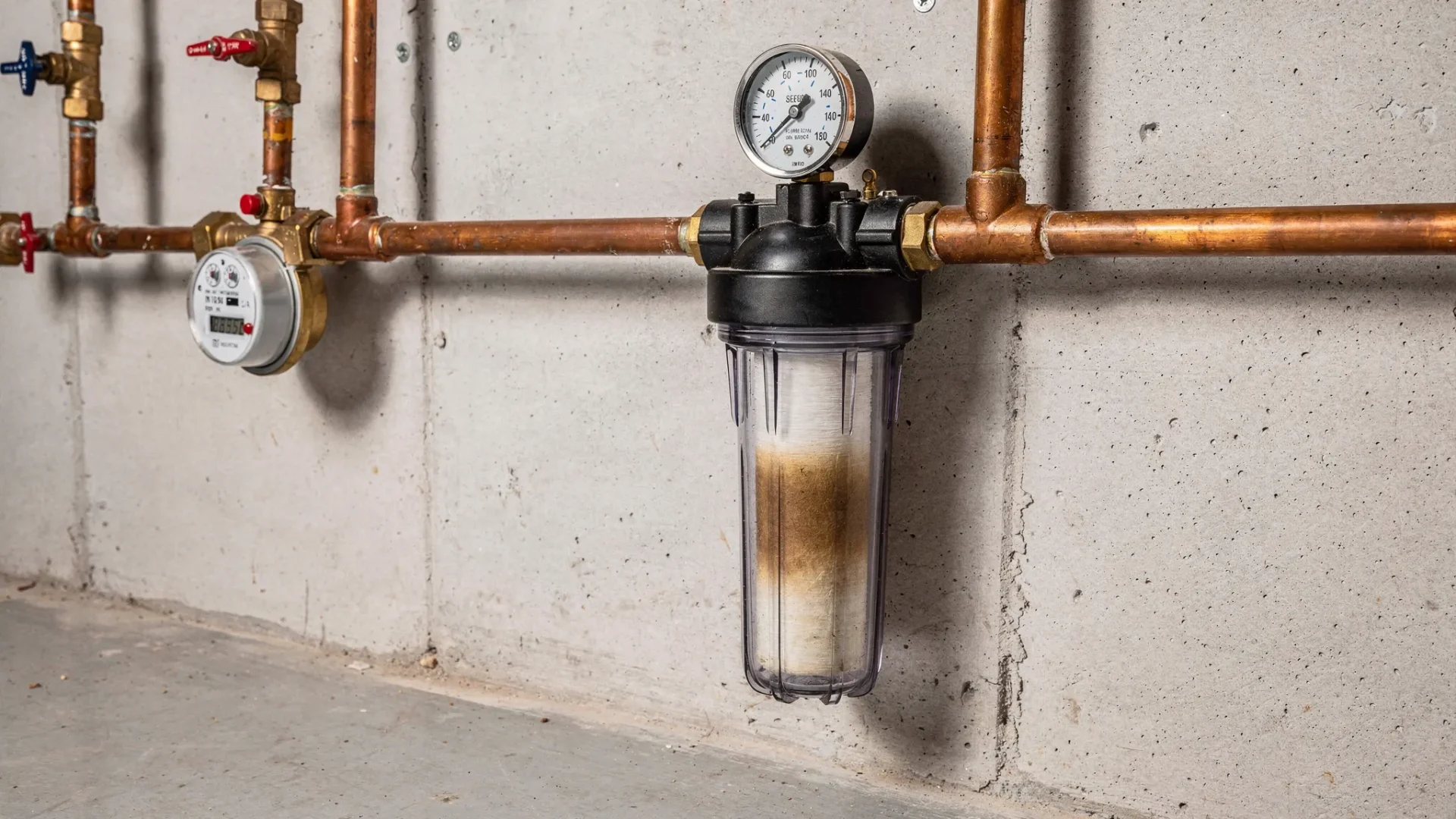
If your aerators clog repeatedly, it’s a strong sign your home would benefit from point-of-entry sediment control (filtering where water enters the house).
3) Look in the toilet tank
Toilets are great “sediment detectors” because they fill slowly and sit.
- Turn off the water, flush, then remove the tank lid.
- If you see grit settled at the bottom, it’s another clue the sediment is coming in through the supply.
4) Hot-only or cold-only?
- Hot-only sediment can point toward water heater sediment or scale breaking free.
- Both hot and cold usually means it’s entering the home upstream of the water heater.
If you hear popping or rumbling from the tank, scale and sediment may be accumulating. TapTech has a Kingston-focused read on protecting tanks from buildup: Protect your hot water tank from scale in Kingston.
Why grit is hard on your plumbing (and what it breaks first)
Even when sediment is not a health concern, it can be rough on mechanical parts. The usual “first victims” are:
- Faucet cartridges and shower mixing valves (grit scratches seals)
- Toilet fill valves (small orifices clog easily)
- Appliance screens (dishwashers, washing machines)
- RO prefilters and membranes (sediment shortens lifespan)
If your “grit problem” is paired with recurring clogs or slow drainage, it may also be a bigger plumbing story. This article covers when it’s time to look beyond routine cleaning: When is drain cleaning a sign of a bigger issue?.
The right fix depends on where the sediment is coming from
Here’s a clear way to match symptoms to solutions.
| What you’re noticing in Kingston Mills | Likely source | Best first step | Long-term solution that actually lasts |
|---|---|---|---|
| Sediment appeared suddenly for a day or two | Municipal flushing, local main work | Flush cold lines, clean aerators | Add whole-home prefiltration if it’s happening repeatedly |
| Aerators clog every few weeks | Ongoing particulate coming into home | Install a point-of-entry sediment filter | Properly sized staged filtration (protects fixtures without killing pressure) |
| Grit in toilet tank and bathtub, plus low pressure | Heavy sediment load or undersized filtration | Confirm pressure, check for clogged cartridges | System design that matches flow rate and particle load |
| Well water looks clear, then turns gritty after rain or pump cycling | Well disturbance or silt | Capture a sample, do basic tests | Well-appropriate sediment handling, often with backwashing or staged filtration |
Sediment filtration options (and what Kingston Mills homeowners usually need)
Most homeowners do best when they treat sediment as a whole-home protection issue, not a single-faucet issue.
Option A: A simple cartridge sediment filter (common, cost-effective)
This is often the starting point when you have visible grit.
- A 20 micron filter is typically a good first-stage choice when sediment is heavier.
- A 5 micron filter catches finer particles but can clog faster if used alone.
TapTech has a deeper homeowner guide on choosing the right micron rating (and avoiding pressure problems): Sediment filter sizing: 5 micron vs 20 micron.
Option B: Staged sediment filtration (20 micron then 5 micron)
If you want better water clarity without frequent clogs, staged filtration is often the sweet spot.
Key benefit: better protection with less pressure drop risk than running a fine filter alone.
Option C: Spin-down prefilter (great when the grit is truly “sandy”)
A spin-down unit catches heavier grit and can be flushed out.
Key benefit: less cartridge waste, and it protects your finer filters downstream.
Avoid this common trap: “too fine, too small, too restrictive”
A filter can be technically “good,” and still be wrong for the home if it’s undersized.
If you’ve installed filtration and now your showers feel weak, this guide can help you troubleshoot safely: Low water pressure after filter install.
City water in Kingston Mills: where HALO fits (and where sediment fits)
For Kingston homeowners on city water, TapTech generally prioritizes HALO Water Systems to address:
- Chlorine taste and odour at taps and in showers
- Whole-home filtration benefits (comfort and fixture protection)
- Scale management (a big deal in the Limestone City)
Important detail: sediment and chlorine are different problems.
If Kingston Mills sediment is recurring, the usual “clean” setup is:
- A correctly sized sediment strategy (to stop grit from damaging fixtures)
- Plus a HALO whole-home system to improve taste/odour and help reduce scale-related headaches
If chlorine is part of your complaint as well, you may also like: Kingston tap water chlorine: why you smell it in winter.
Well water near Kingston Mills: where Novo fits
In rural and well-water pockets around Kingston and nearby hubs, grit rarely comes alone. You might also be dealing with iron staining, sulphur odour, or heavy hardness.
TapTech commonly recommends Novo Water Conditioning for aggressive or well water because it can be selected to target those tougher profiles.
A practical approach for well-water homes looks like:
- Start with proper testing (so you treat the cause, not the symptom)
- Add sediment protection to prevent wear and clogging
- Size treatment around the issues that are most common on wells (hardness, iron, sulphur)
If you want a simple decision framework for system types, this helps: Water softener vs filter vs RO vs UV.
Don’t forget drinking water: when RO makes sense
Sediment filtration protects plumbing, but it does not automatically give you the “best glass of water.” If taste is a concern, or you want higher confidence for cooking and drinking, under-sink reverse osmosis (RO) is often the next step.
RO works best when it’s protected by prefiltration upstream, which is another reason a sediment plan matters.
For a clean comparison of system roles, see: Whole-home filtration vs under-sink RO.
Maintenance: how to keep sediment solutions working
The best filtration setup is the one you can maintain without surprises.
Here are the most homeowner-relevant rules of thumb:
- Watch for pressure drop at showers and tubs, it’s often the first clue a sediment filter is loading up.
- Check and clean aerators after any known city water disturbance.
- If you have an RO system, follow a disciplined maintenance schedule so sediment does not shorten component life. TapTech’s schedule guide is here: Reverse osmosis maintenance: filter change schedule.
When to call a pro (especially in older Kingston-area plumbing)
DIY checks are useful, but it’s time to bring in a licensed pro if:
- Sediment is persistent for more than a few days on city water
- You’re seeing grit plus frequent fixture failures (toilet fill valves, cartridges)
- Your water heater is noisy, or hot water flow is dropping
- You suspect your well is producing sand or silt consistently
A proper in-home visit can confirm source water, check pressure, and recommend filtration that won’t sacrifice everyday comfort.
Local help (Kingston Mills, Kingston, Gananoque, and Napanee)
TapTech helps homeowners in Kingston Mills and across the city, plus nearby communities where well-water challenges are more common.
- TapTech in Kingston
- TapTech in Gananoque
- TapTech in Napanee
If you’re in Kingston Mills, Barriefield, Greenwood Park, Rideau Heights, or along the water toward the Inner Harbour and Portsmouth Village, the goal is the same: stop grit at the door, protect fixtures, and make water feel better to live with.
Frequently Asked Questions
Is sediment in my water dangerous? Often, sediment is more of a plumbing and comfort issue than an immediate health issue, especially if it’s from city flushing or disturbed lines. That said, sudden changes in water quality should be investigated, and well owners should follow regular testing guidance.
Why do my faucet aerators keep clogging in Kingston Mills? Repeated clogs usually mean particulate is entering the home, not just sitting in the faucet. A point-of-entry sediment filter, properly sized for your home’s flow, is typically the long-term fix.
Should I use a 5 micron or 20 micron sediment filter? It depends on how much grit you have and your home’s flow needs. Many homes do well with 20 micron first, then 5 micron if finer polishing is needed. Using only 5 micron can clog quickly if sediment is heavy.
Will a whole-home filter fix grit and chlorine taste? It can, but grit and chlorine are different targets. In many Kingston setups, you handle grit with sediment prefiltration, then use a whole-home system (often HALO for city water) for taste, odour, and scale comfort.
I’m on a well near Kingston Mills, what’s the best first step? Test first, then match treatment to your actual water. If your well has aggressive water issues like iron, sulphur, and heavy hardness, Novo systems are often a strong fit, combined with the right sediment handling.
Book a water check and get a sediment plan that won’t kill your pressure
If Kingston Mills grit is chewing through aerators, valves, or appliances, the fix is usually straightforward once you know whether you’re on municipal water or a well, and what the sediment load looks like.
To get clear answers, visit TapTech and book a water assessment. We’ll help you pinpoint the source, choose the right sediment filtration, and match the rest of your system to your water (HALO for Kingston city water, Novo for aggressive well water) without guesswork.


