A blocked drain in Kingston is stressful, and choosing the right drain unblocker company should not feel like guesswork. A proper visit should do more than make water move again, it should identify why the blockage happened and explain what will help it stay clear.
That matters in older neighbourhoods, student rentals, and heritage homes alike. A slow kitchen sink in Williamsville may be simple grease buildup, while a basement floor drain backup can point to a main line issue. The visit should match the risk.
For homeowners comparing Drain Cleaning Kingston options, here is what a professional drain unblocking visit should include from start to finish.
What a drain unblocker company should do before touching the drain
Good drain work starts with questions. The technician should not arrive, feed a cable into the nearest opening, and leave without understanding the bigger picture.
A blocked drain can be local or system-wide. Local means one fixture is affected, such as a bathroom sink or tub. System-wide means several fixtures are acting up, which may point to the main sewer line that carries wastewater out of the home.
What should a technician ask before clearing a drain?
A technician should ask which fixtures are slow, whether there is gurgling, where water is backing up, and how often it has happened before. These answers help separate a simple fixture clog from a main line blockage. They also help prevent the wrong tool from being used in the wrong pipe.
A proper first check usually follows this order:
- Confirm whether the problem affects one drain or several fixtures.
- Ask when the issue started and whether it has happened before.
- Look for warning signs such as toilet gurgling, sewer odour, or water coming up in a tub or floor drain.
- Find the best access point, often a cleanout, which is a capped opening made for drain service.
- Explain the likely next step before any clearing begins.
If you are still deciding whether to call, Tap Tech has a helpful guide on quick checks before calling a drain service. Those checks can help you describe the problem clearly and avoid making it worse with chemical drain cleaners.
The visit should include diagnosis, not just drain unblocking
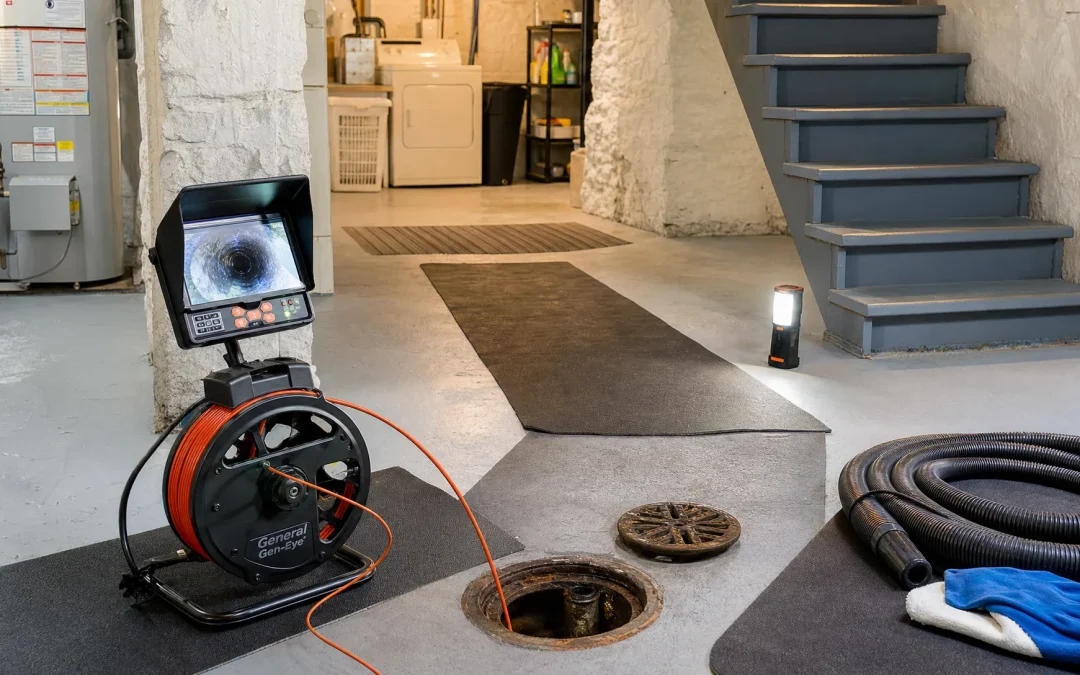
A sewer camera inspection uses a small waterproof camera to view the inside of the pipe. It can show roots, grease, mineral scale, broken pipe sections, low spots, and older cast iron wear.
At Tap Tech, the goal is to camera-inspect before recommending a larger repair or cleaning method. That way, the homeowner sees the condition of the pipe instead of being asked to take someone’s word for it.
This is especially useful in homes around Kingscourt, Portsmouth Village, and the Sydenham District, where older drain materials are common. Cast iron drains can develop rough interior walls over time. Once the inside of the pipe becomes rough, paper and waste catch more easily.
A proper diagnosis should explain three things:
| What gets checked | Why it matters | What the homeowner should learn |
|---|---|---|
| Access point | Poor access can limit cleaning quality | Where the line can be safely cleared from |
| Pipe condition | Older pipes may be scaled, cracked, or offset | Whether the pipe is clearable, worn, or damaged |
| Blockage type | Grease, roots, wipes, and scale need different tools | Why the clog formed and what may happen next |
| Repeat history | Recurring clogs usually mean the pipe diameter is not being restored | Whether basic cabling is likely to hold |
If the steps above did not resolve it, Tap Tech can diagnose and fix it. Book online or call (613) 328-6600. Flat-rate pricing quoted before work begins. Same-day service, Monday to Friday.
The clearing method should match the pipe problem
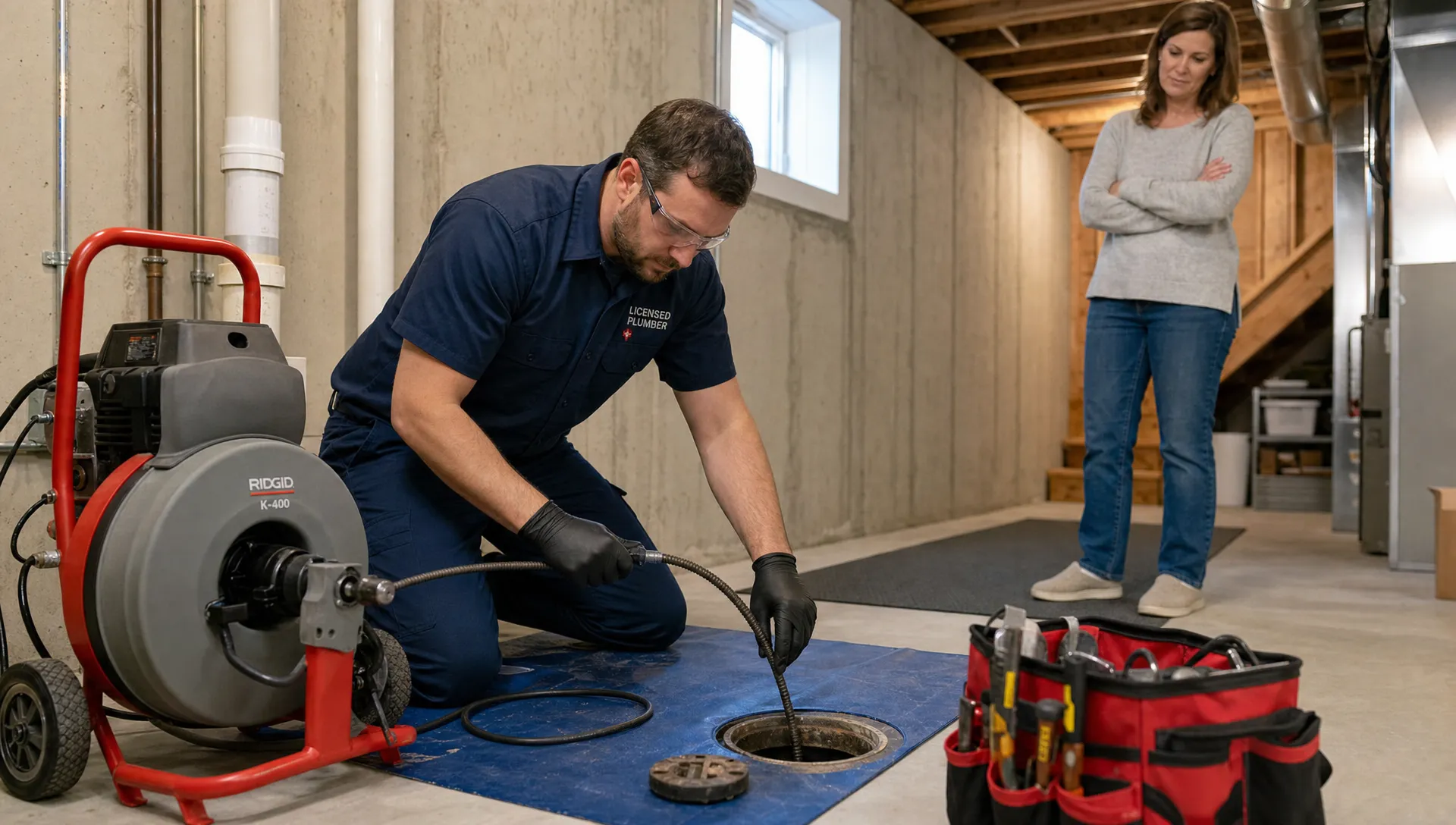
Cabling, also called snaking, uses a rotating steel cable to open a path through a blockage. It is often the right tool for a simple obstruction in a shorter line.
But cabling is not the same as cleaning the full inside diameter of the pipe. It can punch through buildup while leaving grease, scale, or roots along the pipe wall. That is why no responsible company should promise that cabling solves every drain issue.
Hydro jetting uses high-pressure water to scour the inside of a drain line. Descaling is a more targeted process used on rough, scaled pipe, often older cast iron, to recover more of the pipe’s inside opening where the pipe condition allows it.
A professional should explain when a line needs more than cabling:
| Situation | Why cabling may not be enough | More suitable next step |
|---|---|---|
| Line runs more than 25 feet with several turns | The cable can follow the easiest path and leave buildup behind | Camera assessment, then possible jetting |
| Line has not been professionally cleaned in 10 or more years | Long-term buildup can narrow the pipe | Jetting or descaling if the pipe condition supports it |
| Second or third blockage on the same line within 2 to 3 years | Repeat failure suggests the pipe diameter is not being restored | Camera inspection before recommending the next method |
This is not about selling the biggest service. It is about matching the work to the condition of the pipe. If a simple clearing is all that is needed, the technician should say that. If a line is heavily scaled or repeatedly backing up, the technician should explain why basic cabling may not hold.
Pricing should be clear before work begins
A proper drain unblocking visit should not leave you wondering what the final invoice will look like. The homeowner should be told what is being done, why it is being done, and what the fixed price is before work starts.
Tap Tech uses flat-rate pricing quoted before work begins, drawn from a published price book. There is no meter running while the technician works through the diagnosis.
A clear quote should cover the following:
- The drain or line being serviced.
- The access point being used.
- The recommended method, such as cabling, jetting, camera inspection, or descaling assessment.
- The fixed price before the work begins.
- What will happen if the blockage cannot be cleared safely from that access point.
This is important for homes in Barriefield, where heritage property layouts can make drain access less straightforward. A good technician explains limits up front instead of pretending every pipe is the same.
If you want a deeper look at choosing the right service, this guide explains how to choose a drain clean service that fixes the cause, not just the symptom.
The visit should end with proof, cleanup, and a plain-language summary
When the drain is flowing again, the visit is not finished. The technician should run water long enough to confirm flow, check nearby fixtures where relevant, and explain what was found.
If a camera was used, the findings should be described in plain language. A belly means a low spot in the pipe where water and solids can sit. An offset means two pipe sections no longer line up properly. Scale means hard buildup that narrows the inside of the pipe.
A proper wrap-up should answer these questions:
- What caused the blockage?
- Was the pipe fully cleaned or only opened enough to restore flow?
- Is there evidence of roots, scale, a belly, or damaged pipe?
- Is maintenance recommended, or was this likely a one-time obstruction?
- What should the homeowner watch for over the next few days?
Homes near Rideau Heights and Kingston’s north end can have a mix of older and newer drainage materials. That makes the final explanation important. The homeowner should understand their own pipe, not just hear that the drain is clear.
Red flags during a drain unblocking visit
Most homeowners are not drain experts, and they should not have to be. Still, a few warning signs can help you recognise when a visit is not being handled properly.
Be cautious if a company will not explain the difference between cabling and jetting. Be cautious if a major repair is recommended without camera evidence. Be cautious if the person clearing the drain promises that one pass with a cable will stop all future problems.
It is also a concern if the visit ends with no summary. You should know what came out of the line, what the technician saw, and whether the problem looks simple or likely to repeat.
Frequently Asked Questions
Does every blocked drain need hydro jetting? No. A simple clog in a short fixture drain may only need cabling. Jetting is more appropriate when the line is long, repeatedly backing up, heavily built up, or not restored by cabling.
Should a drain be camera-inspected before clearing? Not every small fixture clog needs a camera first. But if the issue is a main line backup, a repeat blockage, or a possible pipe condition problem, camera inspection helps identify the cause before recommending the next step.
Can I use chemical drain cleaner before the visit? It is better not to. Chemical cleaners can sit in the pipe, create safety risks during service, and may not solve grease, roots, scale, or a main line blockage.
How do I know if the blockage is in the main sewer line? If several fixtures are slow, toilets gurgle, or water backs up into a tub, shower, or floor drain, the main line may be involved. Stop running water and arrange a professional diagnosis.
What to expect from Tap Tech
A proper drain unblocking visit should include careful questions, the right access point, camera-backed diagnosis when needed, a clear method, flat-rate pricing before work begins, and a plain-language summary when the work is done.
If the steps above did not resolve it, Tap Tech can diagnose and fix it. Book online or call (613) 328-6600. Flat-rate pricing quoted before work begins. Same-day service, Monday to Friday.
Tap Tech provides residential drain cleaning and drain unblocking in Kingston with licensed guidance, diagnostic tools, and clear explanations before any recommended work begins.