
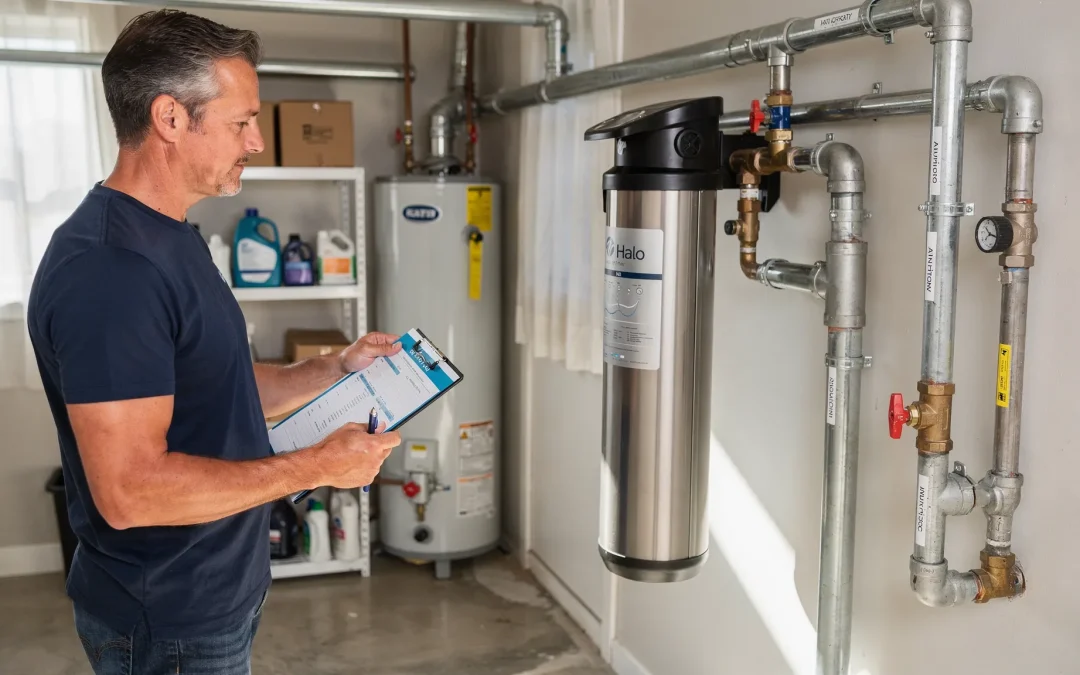
Choosing a water filter system for home can feel strangely complicated. Kingston homeowners in Bayridge, Collins Bay, and the Sydenham District often start with one simple complaint (chlorine taste, spots on glass, dry skin), then discover there are multiple “right” solutions depending on your water source, plumbing layout, and what you want the system to actually do.
This guide systematizes the decision so you can pick a setup that fits your home, not just a product box.
Step 1: Identify your water source (because it changes everything)
Before you compare brands or filter types, confirm which of these you have:
- Municipal (city) water: common across Kingston Proper (West End, Downtown, East End), including neighbourhoods like Cataraqui North and Portsmouth Village.
- Private well water: common in surrounding rural hubs like Gananoque and Napanee, plus places like Verona, Bath, and South Frontenac.
Why it matters: city water is disinfected (often noticeable as chlorine taste or odour) and may be hard. Well water can be “aggressive,” meaning it can bring iron, sulphur (rotten egg smell), heavy hardness, low pH, and sometimes bacteria risk.
If you are not 100% sure what is in your water, start with testing, then size the equipment to the results. TapTech has written a clear breakdown of what’s reliable in water testing at home vs. pro testing.
Step 2: Decide what “better water” means in your house
Most homeowners are trying to solve one (or more) of these:
- Taste and odour (chlorine, musty notes, metallic flavour)
- Scale protection (spots on dishes, buildup on faucets, hot water tank noise)
- Skin and hair comfort (dryness, itchy feeling after showers)
- Sediment and grit (cloudiness, particles in toilet tanks, clogged aerators)
- Well-water issues (iron staining, sulphur odour, heavy hardness)
- Higher-confidence drinking water (especially for coffee, cooking, and baby formula prep)
Be careful with “one-size-fits-all” promises. A filter that improves taste may do nothing for hardness, and a softener that removes hardness may not remove chlorine taste.
Step 3: Understand the 4 common home filter setups
You will see the same building blocks over and over. The trick is picking the right combination.
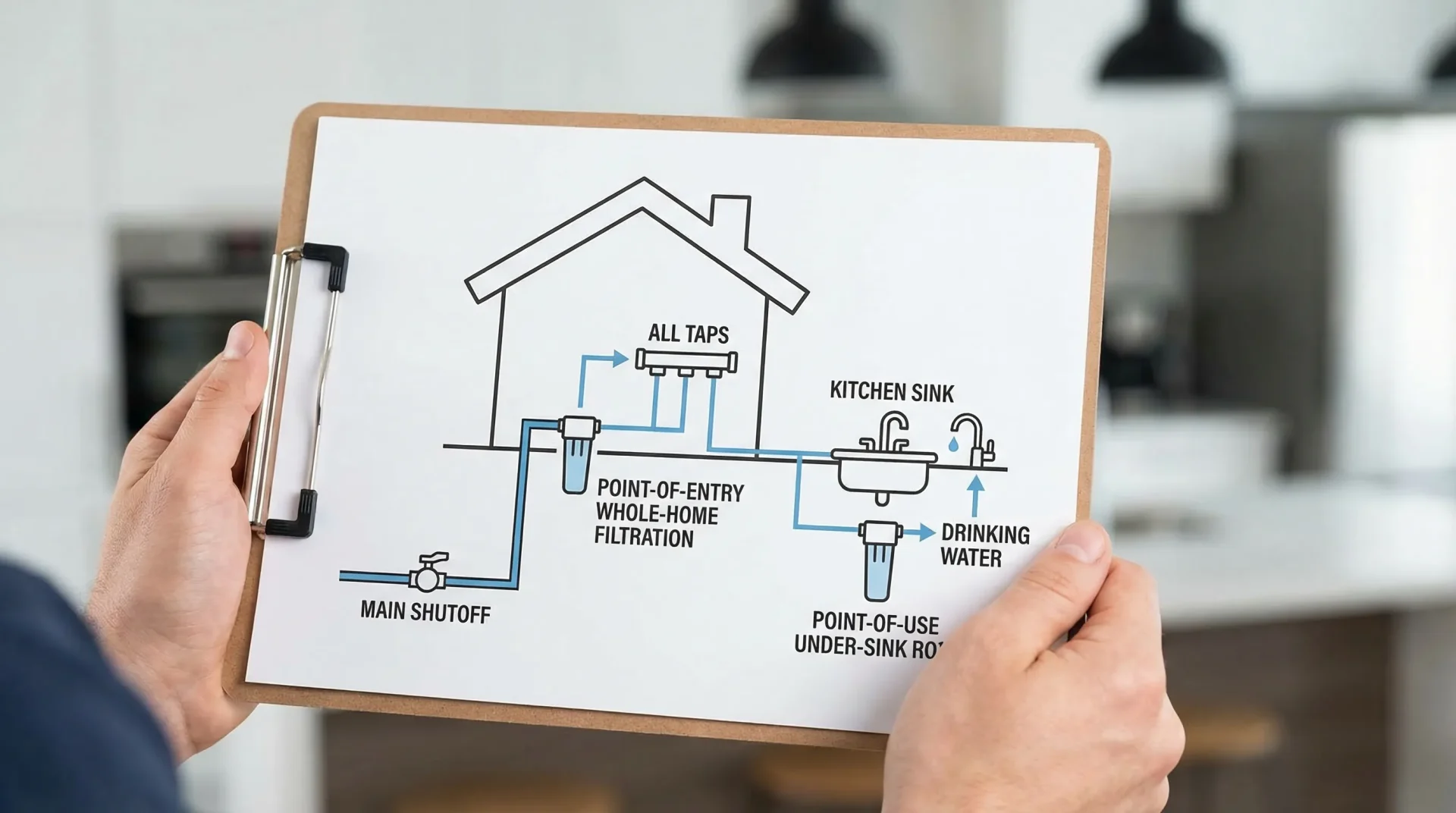
Whole-home filtration (point-of-entry)
Installed where water enters your home so every tap gets treated. This is the best fit if your daily annoyance is shower smell, scale, or widespread spotting.
Under-sink filtration (point-of-use)
Installed at one location, usually the kitchen. Great when your main goal is drinking water quality, while keeping the rest of the home unchanged.
Water softening (hardness removal)
A classic fix for calcium and magnesium hardness (scale). This is especially relevant in hard-water regions.
Reverse osmosis (RO)
A point-of-use system (most often under-sink) designed to produce very clean drinking water. It is commonly paired with whole-home treatment so the RO system lasts longer and performs better.
Here’s a practical way to compare what each approach is good at:
| System type | Treats water for | Best at | Usually not intended for |
|---|---|---|---|
| Whole-home filtration (POE) | Entire home | Chlorine taste/odour reduction, broad “comfort” improvements, protecting plumbing from nuisance issues | Producing ultra-purified drinking water at one faucet |
| Under-sink filtration (POU) | One faucet | Drinking water taste and targeted reduction of specific contaminants | Fixing shower smell, scale on fixtures across the home |
| Softener | Entire home (or selected lines) | Hardness removal and scale prevention | Removing chlorine taste/odour (unless paired with carbon) |
| Under-sink RO | One faucet | High-quality drinking water | Addressing whole-home scale, shower comfort, or multiple fixtures |
Step 4: Choose a city-water setup for Kingston homes (Halo is usually the starting point)
In Kingston neighbourhoods like Reddendale, Henderson Place, and Barriefield, the most common “city water” complaints are:
- Chlorine taste and smell (often more noticeable in winter)
- Hard water symptoms like spots, soap scum, and scale protection concerns
For these households, TapTech typically prioritizes Halo Water Systems for city water because they’re designed as whole-home solutions that target day-to-day comfort issues across the house.
A common, practical Kingston setup looks like this:
Option A: Whole-home Halo filtration and conditioning (comfort-first)
This is a great fit when you want better showers, less chlorine smell, and less scale-related frustration without managing salt bags.
If chlorine odour is your main pain point, you may also want to read Kingston tap water chlorine: why you smell it in winter and the comparison in Halo vs Brita for chlorine taste in Kingston.
Option B: Halo whole-home plus under-sink RO (most popular “best of both”)
This is the “all taps feel better, drinking water is next-level” approach.
- The whole-home system improves the water used for bathing, laundry, and fixtures.
- The RO system focuses on what you drink and cook with.
If you are weighing RO seriously, TapTech has a Kingston-specific cost breakdown in RO vs bottled water in Kingston.
Option C: If you have a specific constraint (condo, small mechanical room)
Some properties, especially in condo-heavy pockets like Portsmouth Village, have limitations on what can be installed.
- If you can only do one thing, many homeowners start with under-sink RO.
- If the unit has a shutoff and allowed space, a compact whole-home solution can be possible.
For a condo-specific walkthrough, see Portsmouth Village: condo-friendly water treatment options.
Step 5: Choose a well-water setup for rural areas (Novo is built for aggressive water)
If you’re on well water in Napanee or Gananoque, you may be dealing with a different category of problems:
- Iron staining (orange or rust-coloured marks)
- Sulphur odour (rotten egg smell)
- Very heavy hardness (scale and soap performance issues)
- Potential low pH or corrosive water characteristics
TapTech generally recommends Novo Water Conditioning for these “aggressive water” conditions because well-water treatment often needs configurable staging (not just a single filter).
If your well water has been hard on fixtures or pipes, start with:
- Napanee aggressive water: signs you need a Novo system
- Gananoque well water odours: what causes the smell?
A typical well-water “treatment train” (sequencing matters)
Well water is usually handled as a sequence, because one issue can block another system from working properly.
A common order is:
- Sediment pre-filtering (protects valves, cartridges, and fixtures)
- Iron and sulphur treatment (when present)
- Softening (hardness removal, when needed)
- UV disinfection (when testing indicates it is appropriate)
- Optional under-sink RO (for drinking water preference)
If you’re deciding between UV, softening, or both, TapTech breaks it down for local wells in Sydenham well water: do you need UV, softener, or both?.
Step 6: Size the system to avoid pressure drop (a common homeowner regret)
A “great” filter that makes your shower pressure feel weak is not a great filter.
When homeowners call from places like Westwoods or Cataraqui North, pressure concerns often come down to one of these:
- The filter is undersized for the home’s peak flow (multiple showers, laundry, dishwasher)
- The cartridge is too fine for the application, or clogs quickly
- The plumbing has other restrictions (old valves, scale buildup, PRV issues)
Two practical resources that help you ask the right questions before you buy:
- Cataraqui North: choosing a filter that won’t drop pressure
- Sediment filter sizing: 5 micron vs 20 micron
If you already installed a system and pressure changed, this troubleshooting guide is worth bookmarking: Low water pressure after filter install: common causes.
Step 7: Be honest about maintenance (it’s part of the “right setup”)
Every system has maintenance. The right setup is the one you will actually maintain.
Whole-home filtration
Maintenance depends on whether it uses cartridges, backwashing media, or other approaches. The key homeowner habit is not ignoring performance changes (taste shifts, pressure drop, more spotting).
Water softeners
Expect salt management and periodic checks. If your current unit is older, TapTech outlines replacement timing and symptoms in when Kingston homeowners should consider replacing their water softener.
Under-sink RO
RO needs a filter change schedule to stay effective and protect the membrane. TapTech’s local schedule guide is here: Reverse osmosis maintenance: filter change schedule.
Plumbing considerations (how your filter choice affects the rest of the house)
Water treatment is not just about taste, it is also about reducing wear on plumbing and fixtures and avoiding avoidable installation mistakes.
Where the system installs and why it matters
Whole-home systems typically install near your main shutoff and require:
- Proper shutoffs and a bypass
- Correct pipe sizing and support
- A drain connection if the system backwashes or regenerates
Under-sink systems (like RO) require careful plumbing connections, space planning, and leak-safe installation.
If you like to understand the “why” behind safe installs and cross-connection protection, TapTech’s guide to backflow is a solid reference: How to install backflow prevention devices.
Why treating water can reduce plumbing headaches
In hard-water areas, scale can contribute to:
- Stiff or failing cartridges and valves
- Reduced hot water performance and noisy tanks
- Higher risk of fixture issues over time
For Kingston specifically, protecting the tank from scale is a big deal. This article ties the water side to the plumbing side: Protect your hot water tank from scale in Kingston.
If you are installing a new water heater or have a closed system, expansion control is also important. TapTech explains it in How to install a thermal expansion tank.
Drain cleaning considerations (water quality can contribute to slow drains)
Not every clogged drain is caused by “bad water,” but water quality can make common drain problems worse over time.
How hard water shows up in drains
Hard water encourages mineral scale and soap-related buildup that can:
- Narrow pipe diameter gradually
- Make hair and soap scum cling more aggressively
- Contribute to recurring slow drains (especially tubs and bathroom sinks)
If you’re not sure whether you’re dealing with soap scum or scale on fixtures, this quick diagnostic helps: Soap scum vs hard water scale.
When drain cleaning is the better “first move”
If your symptoms are localized (one tub slow, one sink gurgling), that’s often a drain issue first, not a water-treatment issue.
TapTech’s Kingston-focused warning list is helpful if you live in an older area like Kingscourt or parts of Williamsville: 9 warning signs your old Kingston home needs drain cleaning services.
If clogs keep returning, professional cleaning and inspection can prevent bigger problems. For method comparisons, see Hydro jet drain cleaning vs snake and the bigger-picture diagnostic in When is drain cleaning a sign of a bigger water or plumbing issue?.
A simple “choose your setup” cheat sheet
Use this as a reality check after you identify your water source and top complaint.
| If you live in… | Your water is usually… | Most common complaints | A practical starting setup |
|---|---|---|---|
| Kingston city-serviced areas (Collins Bay, Downtown, Bayridge) | Municipal | Chlorine taste/odour, scale spotting, skin comfort | Whole-home Halo for comfort, add under-sink RO if drinking water is a priority |
| Napanee, Gananoque, rural hubs | Well water | Iron staining, sulphur odour, heavy hardness, aggressive water | Novo-based staged treatment (based on testing), add RO for drinking water if desired |
For deeper Kingston specifics, TapTech also has a dedicated overview: Best water treatment system for Kingston homes.
When it’s worth calling a pro (and what to ask)
If you want a system that performs well and does not create pressure or plumbing issues, professional sizing and installation is usually the difference-maker.
A good installer should be able to explain, in plain language:
- What your water test results mean and what they do not mean
- What the system will improve (and what it won’t)
- How maintenance works, including realistic intervals
- How the installation will protect pressure, plumbing, and drainage
If you’re in Kingston or nearby communities, TapTech’s approach is designed around diagnosing “problem water” first, then installing a tailored system that fits your home’s flow and layout. Start by exploring their local water-treatment resources and booking options at TapTech.


