

Low water pressure can make a normal day in Kingston feel like a chore. If you’re searching plumber Kingston because your shower is weak or your kitchen tap is barely flowing, this step-by-step guide will help you figure out what’s going on and what you can safely fix yourself.
I’m going to walk you through the same checks I use on Plumbing Kingston service calls, especially in our mix of older city homes and rural properties around Napanee and Odessa.
First, confirm what “low pressure” really means
Homeowners often say “pressure,” but there are two different problems:
Low pressure (low PSI): Water comes out weak everywhere, even one tap at a time.
Low flow (restricted faucet or showerhead): The pressure might be fine, but the fixture is partially blocked, so not much water comes out.
Why this matters: low flow is often a simple DIY clean. True low pressure can point to valves, a failing pressure regulator, a leak, or (for rural homes) a well system issue.
Is low water pressure an emergency?
Most of the time, low water pressure is not an emergency if you still have running water and there’s no leaking. It becomes urgent if the pressure drops suddenly, you hear water running when nothing is on, or you see wet spots or staining, because that can signal a hidden leak.
Your 15-minute “where is the problem?” test (step by step)
Do these checks in order. You’ll save time and avoid guessing.
Check if it’s one fixture or the whole house: Test one sink on the main floor and one upstairs (hot and cold on both). If only one is bad, it’s probably a clogged aerator or a shutoff valve under that sink.
Check hot vs. cold: If only hot is weak everywhere, the issue is likely around the water heater, a hot-side shutoff, or hot water piping.
Check “right now” vs. “always”: If pressure is only poor at certain times, note the time of day. In some Kingston areas, demand can affect pressure, but big drops still deserve a closer look.
Look for any obvious shutoff valves that are partially closed: Under-sink valves, the main shutoff, and any basement valves near the meter or where the line enters.
Listen and look for leak clues: Toilets refilling on their own, a hiss behind a wall, damp spots, or a suddenly higher water bill.
If you want a simple way to record your results, treat it like a troubleshooting worksheet. I’m a fan of structured approaches used in other “systems” work too, like the Discovery to Deploy method used by managed-service teams (it keeps you from skipping steps).
Fix the common causes of low water pressure (safe DIY)
1) Clean a clogged faucet aerator
An aerator is the little screen at the end of your faucet spout. It catches grit and scale. In spring, freeze-thaw can shake loose sediment that ends up right here.
Put the sink plug in (small parts love to fall).
Unscrew the aerator by hand. If it’s stuck, use a cloth and gentle pliers.
Rinse the screen and parts under running water.
Soak the aerator in white vinegar for 30 to 60 minutes if there is crusty buildup.
Reassemble and test.
In Kingston, hard municipal water (often 200–350 mg/L hardness) can create scale that clogs aerators, and whole-home treatment can help reduce that buildup over time (learn more on our Water Treatment Kingston page).
2) Fix a weak showerhead
Showerheads clog the same way as aerators, and they also collect bits of rubber washer.
Unscrew the showerhead.
Check the inlet screen for debris.
Soak the head in vinegar, then rinse.
Wrap the shower arm threads with fresh PTFE tape (thread seal tape) if needed.
Reinstall and test.
3) Make sure under-sink shutoffs are fully open
After a renovation or a quick repair, it’s common for a valve to be left partially closed.
Look under the sink for the two shutoffs (hot and cold).
Turn each valve counterclockwise until it stops (gentle, do not force).
Test the tap.
If a valve is stiff, leaking at the stem, or won’t fully open, that’s a good “call a pro” moment.
Mid-post CTA (low pressure still not fixed?)
If the steps above didn’t resolve it, Tap Tech can diagnose and fix it with transparent options and flat-rate pricing. Book online through our Kingston plumbing service page or call (613) 328-6600.
Check the two big “whole-home” culprits: main shutoff and pressure regulator
If multiple fixtures are weak, start thinking whole-home.
Main shutoff valve (city water homes)
In many Kingston homes, the main shutoff is near the water meter. Older valves can partially fail inside, especially if they haven’t been exercised (opened and closed) in years.
Find the main shutoff.
Confirm it is fully open.
If it’s a multi-turn valve, open it gently until it stops.
If the valve won’t turn, or it turns but does not change anything, stop and call a licensed plumber. Forcing it can cause a leak.
Pressure regulator (PRV)
A pressure reducing valve (PRV) is a bell-shaped valve that controls incoming pressure. When it fails, pressure can drift low (or sometimes spike high).
A simple homeowner check is to measure pressure at an outdoor hose bib with a pressure gauge.
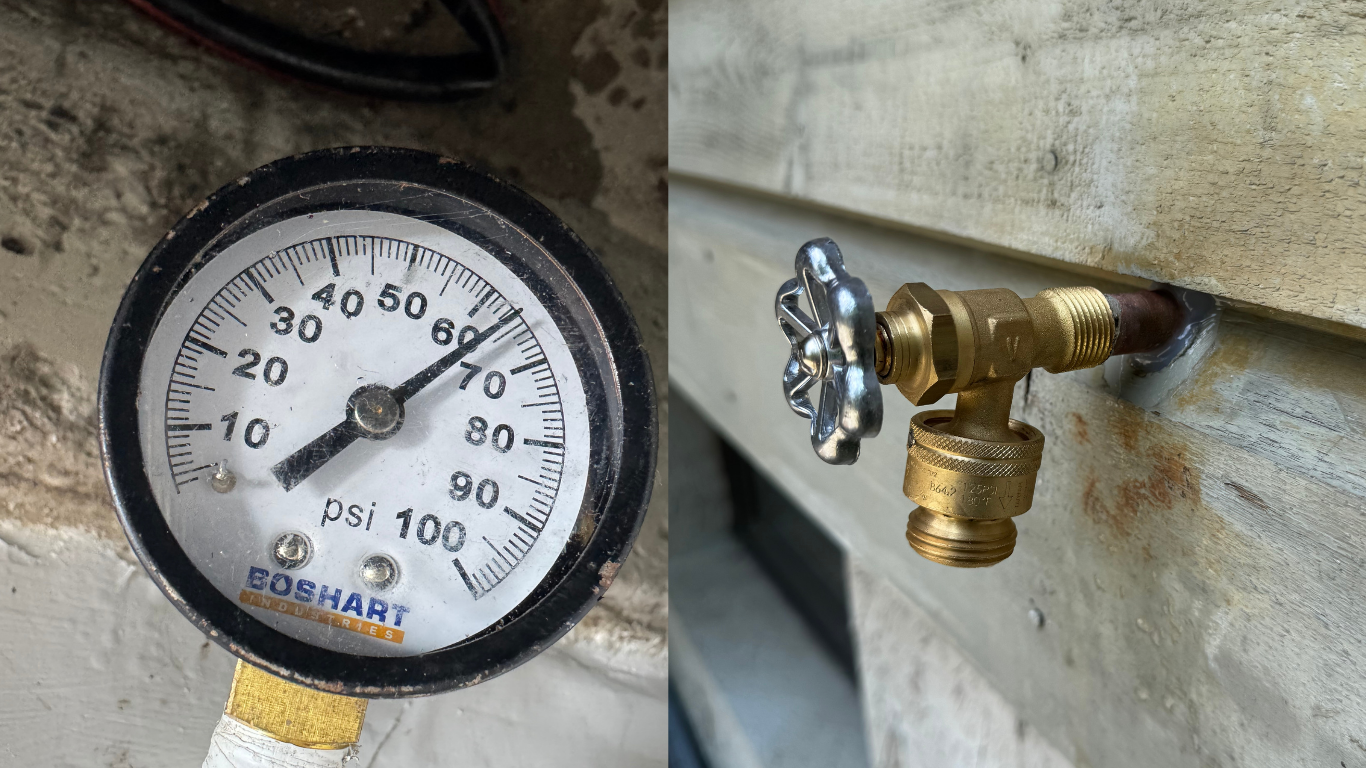
Here’s a practical interpretation table:
| What you observe | What it often means | What to do next |
|---|---|---|
| One faucet or one shower is weak | Clogged aerator, clogged showerhead, partially closed shutoff | Clean fixture and open shutoff |
| Cold is strong, hot is weak everywhere | Hot-side restriction near heater or a hot water piping issue | Check heater valves, call plumber if unsure |
| All fixtures weak, pressure gauge reads low | Main valve partially closed, PRV set low or failing | Confirm valves, likely needs pro diagnosis |
| Pressure drops hard when two fixtures run | Restriction in piping, failing PRV, undersized supply, well system issue | Keep testing, prepare to call plumber |
Rural homes near Napanee, Odessa, and Sydenham (South Frontenac): add these well checks
If you’re on a well (common around Napanee, Odessa, and Sydenham (South Frontenac)), low pressure often comes from the well system, not the plumbing inside the house.
Check the pressure tank gauge: Many systems are set around a 40/60 range (pump on at about 40 PSI, off at about 60 PSI), but settings vary.
Listen for short-cycling: If the pump turns on and off rapidly when you run water, the pressure tank could be waterlogged or the pressure switch could be failing.
Look for clogged sediment filtration: Rural wells often carry sediment. If a filter housing is plugged, pressure can drop across the home.
Check for seasonal issues: Spring thaw can stir up fine sediment in some wells, and a deeper well can behave differently than a shallow one.
If you’re not comfortable around electrical components, do not open the pressure switch cover. That’s a job for a licensed pro.
When low pressure points to bigger plumbing issues in Kingston
Some problems are common in Kingston and area because we have a lot of older housing stock.
Galvanised pipes and internal corrosion
In older neighbourhoods like Barriefield (heritage homes) and pockets of older Kingston, galvanised steel supply lines can corrode from the inside. That reduces the pipe’s inside diameter over time, like cholesterol in an artery.
Clues you might have this:
Pressure is getting worse year by year
You see rusty or discoloured water after not using a tap for a while
One side of the house is worse than the other
Hidden leaks
A leak can lower pressure and also raise your bill. A quick check:
Turn off all taps and appliances.
Watch your water meter (many have a small “leak indicator” triangle).
If it moves, you may have a leak.
If you want a deeper guide for this, read our Kingston homeowner guide to spotting hidden water leaks.
Freeze-thaw damage (this time of year)
Late March in Kingston is classic freeze-thaw season. A partially frozen line that thawed can move debris into fixtures, or it can crack and start leaking slowly.
If you suspect freezing, our what to do for frozen pipes guide is a safe starting point.
When to call a plumber (and what we’ll do differently)
Call a licensed plumber in Kingston if any of these are true:
Pressure dropped suddenly across the whole home
You can’t find or safely operate the main shutoff
You see water staining, damp drywall, or hear water running when everything is off
You suspect a PRV failure or need a replacement
You’re on a well and the pump is short-cycling or pressure swings wildly
A good diagnostic visit usually includes:
Checking static pressure and pressure under load
Confirming valve positions and inspecting for failing shutoffs
Looking for hidden leaks and obvious corrosion points
Explaining the root cause in plain language and offering clear options
If you need help prioritising what’s urgent, our guide on what to fix now vs later in Kingston plumbing repairs can help you decide.
Frequently Asked Questions
What is the most common cause of low water pressure in one faucet? The most common cause is a clogged aerator or a partially closed shutoff valve under the sink. Cleaning the aerator and fully opening the valve fixes many cases in under 30 minutes.
Why is my hot water pressure low but cold is fine? That often points to a restriction on the hot side, such as a partially closed valve near the water heater, debris in a hot-side faucet cartridge, or older hot water piping that has narrowed inside.
Can a pressure regulator cause low pressure in my whole house? Yes. A failing or misadjusted pressure reducing valve can lower pressure everywhere, and it can also cause pressure to fluctuate when water is running.
I’m on a well near Napanee. Why does pressure come and go? Pressure swings often come from the well pressure tank, pressure switch, clogged filters, or a pump issue. If the pump is short-cycling or you see big pressure drops, it’s time for a professional diagnosis.
Ready for a proper diagnosis (without the pressure sales)?
If you worked through the steps and still have low pressure, the next best move is a measured test and a clear plan, especially in Kingston homes with older valves or older pipe materials.
If the steps above didn’t resolve it, Tap Tech can diagnose and fix it, book online through our Kingston plumbing service page or call (613) 328-6600. If you’re outside the city, you can also check our Napanee service area page for local availability.
For low water pressure diagnosis and repair, Tap Tech provides licensed Plumbing Kingston service across Kingston and surrounding Eastern Ontario communities.


