
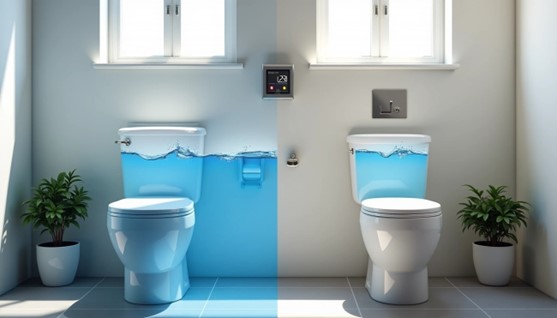
Your toilet might surprise you – it uses about 27% of all water in your home. This makes it the biggest water consumer in your house.
Older toilet models could waste up to 7 gallons with each flush! Modern low-flow toilets in Canada now use just 1.28 gallons per flush, while traditional ones need 3.5 gallons. These efficient models can reduce your home’s water usage by 50% and cut monthly energy bills by approximately 20%.
The numbers make sense when you consider a typical family of four uses more than 300 gallons of water daily. A water-saving toilet saves up to 13,000 gallons annually. Water usage worldwide has quadrupled in the last 40 years, and almost three billion people lack access to safe drinking water. Your household choices matter now more than ever.
We’ll explore everything in low-flow toilets in this piece. You’ll learn about Canada’s best models, installation tips for DIY projects, and when to call a Kingston plumber. We’ll also cover available rebates and explain why these efficient fixtures become increasingly important in Canadian homes. Let’s delve in!
Why Low-Flow Toilets Matter in Canada
Canadians use more water than most people worldwide. Studies show each Canadian uses about 329 liters of water every day. We need to understand these usage patterns to save water better.
How much water toilets really use
Toilets make up 31% of all indoor water use in Canadian homes. Older toilet models from before 1996 use between 13-20 liters each time you flush. The average person flushes five times daily, which means these older toilets waste 65-100 liters of water per person each day.
Canadian toilets made in the 1980s and early 1990s use 13.2 liters (3.5 gallons) or more per flush. Research shows about 25% of Canada’s toilets leak right now. A single leaking toilet can waste up to 200,000 liters of water yearly.
Environmental and financial impact
Excessive water use creates problems beyond our homes. Environment Canada’s data shows people who pay flat water rates use 76% more water than those who pay by volume. This heavy usage puts pressure on city water systems and creates more wastewater.
Your wallet benefits from switching to a low-flow toilet. Households can save hundreds of dollars each year. One toilet can save up to CAD 4,040.74 over its lifetime. Your toilet water bill could drop by half with water-saving models. The EPA says households save around CAD 236.87 yearly.
What makes a toilet ‘low flow’
A “low flow” toilet uses substantially less water per flush than older models. New toilets in Canada must use no more than 4.8 liters (1.28 gallons) per flush. The old ones used up to 26 liters.
You’ll find two types of low-flow toilets: single-flush and dual-flush models. Dual-flush toilets use 6 liters maximum for solids and just 3 liters for liquids. This saves 35-50 liters per person daily. The best performers come with a WaterSense label that proves they flush well and save water.
Choosing the Best Low Flow Toilets in Canada
Choosing a water-efficient toilet for your Canadian home requires understanding the differences between available options. This knowledge will help you pick a toilet that meets your needs and saves water.
Single flush vs dual flush models
Single flush toilets deliver the same water amount for every flush (typically 1.28-1.6 gallons per flush) with a simple handle mechanism. Dual flush toilets give you two choices: a full flush (1.6 GPF) for solid waste and a light flush (0.8-1.1 GPF) for liquid waste. A family of four can cut water usage by up to 67% with dual flush models, though they cost a bit more initially. The simpler operation of single flush toilets makes them ideal for high-traffic areas.
Top-rated low flow toilets in Canada
These manufacturers stand out with their excellent models:
- American Standard H2Option: Comes with dual flush technology and excellent performance
- Toto Drake Cotton: Features “Tornado Flush” for better bowl cleaning
- Kohler Highline (CAD 277.28): A reliable single flush option with pressure-assisted technology
- Woodbridge Dual Flush (CAD 1100.75): A premium choice with modern design
What to look for in WaterSense certified models
WaterSense certification means toilets meet strict efficiency and performance standards. Models should use 1.28 GPF or less—20% below the federal standard. Each toilet goes through thorough testing for bowl cleaning, waste extraction, and drain-line transport. The MaP score matters too—ratings above 600 grams show excellent waste removal capacity.
How to match a toilet to your household needs
Your household has unique requirements. Standard height toilets (15 inches) suit most people, while comfort height models (17 inches) work better for taller people or those with mobility issues. Small bathrooms benefit from round bowls, while elongated bowls provide more comfort. Your household’s size matters most—larger families get the best value from dual flush models that save water across multiple daily uses.
A Kingston plumber can help you install your new fixture correctly and ensure optimal performance.
Installation and Maintenance Tips
A proper low-flow toilet installation helps save water and prevents future issues. Let’s look at your installation options.
DIY vs hiring a Kingston plumber
DIY installation works well if you understand simple plumbing. The process requires you to turn off the water supply, remove the old toilet, install a new wax ring, secure the toilet, and connect the water line. In spite of that, you should hire a Kingston plumber if you lack experience, have old plumbing, need multiple toilet replacements, or want modifications to existing plumbing.
Common mistakes to avoid
Some significant errors can damage your installation. These include overtightening bolts that crack porcelain, skipping the wax ring replacement that causes leaks, and improper base sealing. Your toilet’s base needs proper caulking to prevent water damage and mold growth.
How to test for leaks and efficiency
You can spot leaks by adding food coloring to your tank and waiting 15-20 minutes. Any color that shows up in the bowl points to a leak. You might also hear hissing or dripping sounds that indicate running water.
Adjusting water levels for optimal performance
Your water level should sit 1/2 to 1 inch below the overflow tube. Ball float adjustment needs a clockwise screw turn to lower or counterclockwise to raise the water level. Float cup valves need adjustment rod settings to work at their best.
Rebates, Incentives, and Local Support in Kingston
Want to cut down your water bill? Kingston has great financial incentives when you switch to water-efficient toilets. Here’s what you need to know about the available options and their benefits.
Programs offered by Utilities Kingston
Utilities Kingston gives residential customers a CAD 41.80 credit on their bill when they buy and install low-flush toilets that use 4.8 litres or less per flush. Commercial property owners can get rebates between CAD 41.80 and 83.60 for each toilet. The best deals go to social housing providers who can receive up to CAD 174.17 per toilet.
How to apply for rebates on low-flow fixtures
Your new toilet must use 4.8 litres or less per flush to qualify. Residential customers should fill out an online application and show their purchase receipt. Commercial projects need to contact us before they replace any toilets. Utilities Kingston will check the installation and process your rebate. The funding works on a first-come, first-served basis.conservation@utilitieskingston.com
Community workshops and DIY resources
Kingston’s Everything Drainage workshops teach homeowners about water conservation. Kingston Public Library has plenty of resources about eco-friendly home improvements. Local environmental groups run bulk purchasing programs that help homeowners get water-efficient fixtures at lower prices.
Why local plumbers in Kingston recommend upgrades
Local plumbing experts provide free home assessments to spot ways you can save water. They can help you choose between simple fixture replacements or full system upgrades. These improvements save money and help extend the life of municipal infrastructure.
Conclusion
Low-flow toilets are the quickest way to cut water usage in Canadian homes. These eco-friendly fixtures can cut your water bill in half and help with conservation. Today’s low-flow models work much better than the original versions. They flush powerfully even though they use less water.
The benefits are way beyond the reach and influence of individual homes. Canadians use more water than most other countries in the world. Our move to water-efficient fixtures will ease the burden on city water systems. The money you save adds up over time, and you could save thousands of dollars over your toilet’s life.
Your household’s needs and patterns will determine whether you pick a single flush or dual flush model. Whatever model you choose, a WaterSense certification will give you a toilet that saves water and works well.
DIY fans can handle the installation, but older homes or multiple toilet replacements might need a Kingston plumber’s help. Regular maintenance and leak checks help you retain control over efficiency.
Don’t forget about the great rebates from Utilities Kingston and local programs. These can help cut down your original cost. We all need to save water, and a low-flow toilet is an effective step toward an eco-friendly future that saves you money, too.


